


Railway Carriage Theater to Treno sto Rouf
The famous 19th century science fiction novelist, Jules Verne, heralded in his novels the most amazing inventions of the 20th century, including the “Train-Theater” in his famous book “Around the World in 80 Days” published in 1872. In 1997 - 125 years later - the “Train-Theater“ was realized by Tatiana Ligari, who collected and restored old wagons creating the Railway Carriage Theater to Treno sto Rouf, a vintage train, an innovative railway cultural venue unique in the world, where high quality artistic productions and special gastronomic evenings are hosted.
The Railway Carriage Theater to Treno sto Rouf is a unique industrial monument of contemporary Greek culture and history. It stands on the rails of Rouf Railway and Suburban Station in Athens and it “travels” its visitors in time, art and history while contributing to the upgrading of the historic area of Rouf and its reintegration into the cultural and tourist life of the city.
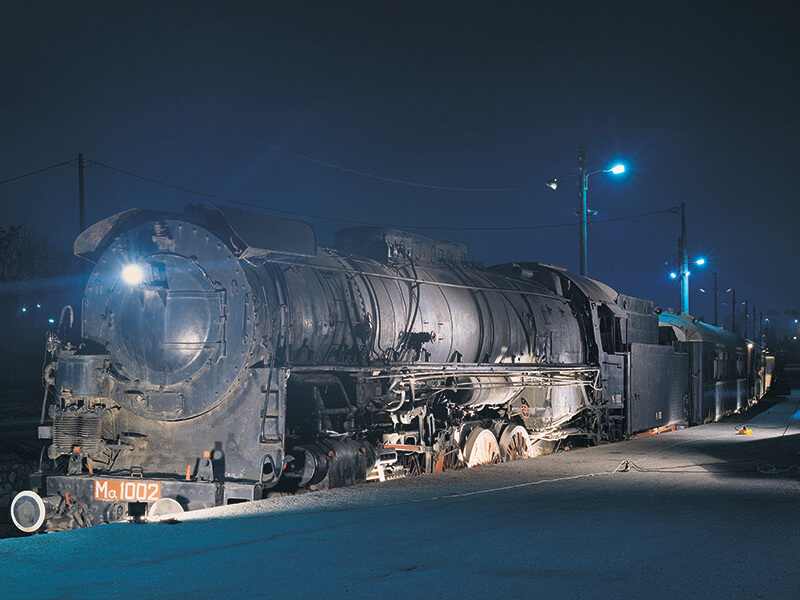
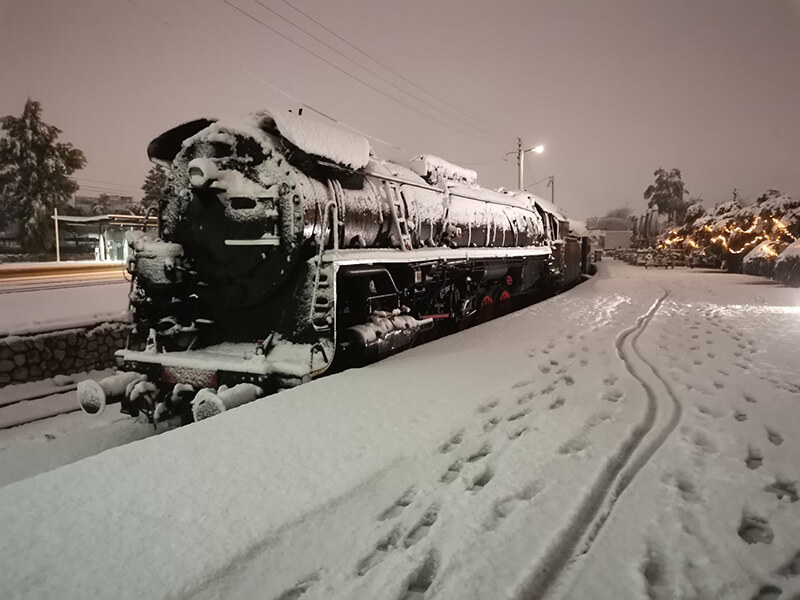
The Railway Carriage Theater to Treno sto Rouf consists of ten refurbished antique cars, including an original wagon-restaurant from the 1926 Simplon Orient Express and a refurbished Breda type steam engine, which dates back to 1953, constituting evidence to contemporary Greek history and industrial heritage. All ten cars have been subsequently transformed, repaired and refurbished accordingly, with great sensitivity to originality and aesthetics, and are now home to a theatre stage, a music stage, a stage for alternative performances, a restaurant, a bar and foyer, dressing rooms and utility rooms as well as an open-air stage hosting all kinds of cultural activities.
The artistic program of the Railway Carriage Theater to Treno sto Rouf consists of various productions (theater, music, dance, fine arts, literature) equally paired with dining at the Wagon Bar and Wagon Restaurant. Every spring and summer our cultural activities take place outdoors on the open-air platform of Rouf Railway Station, called “Apovathra”, overlooking the illuminated wagons, the olive trees and the blossoming oleanders.
The overall work of the Railway Carriage Theater to Treno sto Rouf in both qualitative and artistic terms as well as in quantitative terms has impressive results and huge echo. Indicatively, the number of students who have attended the activities of the children’s theater hall exceeds 140.000, 224 groups of young artists with more than 1.000 artists in total have participated in the young artists’ festivals while hundreds of additional artists and collaborators have participated in productions and co productions of the Railway Carriage Theater to Treno sto Rouf. The number of people who have visited the Train-Theater and have attended its cultural activities exceeds 1.000.000, a number that demonstrates a remarkable contribution to the cultural events of Athens as well as a significant presence in the area of Rouf. This number does not include the large number of restaurant guests at the open-air Bar Restaurant “Apovathra” during summertime and at the Wagon-Bar and Wagon-Restaurant during winter time.
Our Wagons
The Breda Locomotive is a listed Ma1002 of the series Ma1001-1020 (1954), a rare part of the modern Greek history and its industrial heritage. It is one of the heaviest and most powerful locomotives released in Europe and it was part of Italy’s reparations to Greece after World War II.
The Theater Wagon is a refurbished Italian passenger wagon dating from the 1950’s. It has been transformed into a charming and fully-equipped venue, which hosts theatrical, dance and musical events, lectures, etc. It is also fitted with a mechanism,
which simulates the motion of a train.
The Music Wagon Orient Express is the jewel in the crown of the Railway Carriage Theater and has both historical and aesthetic value. Constructed in 1926, it is a completely renovated, original wagon-restaurant -also known as “the
Greek Wagon”- which was part of the legendary “Simplon Orient Express” route that connected Paris with Athens and Istanbul. One of the few remaining examples of its type, this “Pullman Wagon Restaurant” is steeped in the atmosphere of this legendary era and is home to the music stage where the privileged spectators can experience a unique evening.
The Wagon-Bar is an old wooden cargo wagon which often hosts site-specific performances. In this cosy wagon of special decor, guests can enjoy their drink, meet the artists from the various performances or hold a private or company event.
The Wagon-Restaurant is a restored pre-war dining car, which is now a restaurant. Guests can enjoy a romantic dinner in the authentic atmosphere of a bygone era or visit the art installations, photo exhibitions and innovative artistic events held here. The New Wagon is a railcar consisting of 12 compartments, in which Young Artists’ Festivals, Festivals of Contemporary Dance, movie shootings and art events are held every spring and autumn.
Apovathra, the open-air Bar-Restaurant, is ideal for cool summer evenings in the city, next to the tracks, the flowering oleanders and the illuminated wagons of the Orient Express. Visitors can enjoy live music concerts, open-air screenings and exhibitions as well as cocktails and tasty snacks at one of the most alluring spots in the center of Athens. At the same time, museum vehicles and old railway objects are exhibited
at the area of Apovathra.
Axana Arts Company
 Axana Arts Company is a non-profit organization, founded in 1996 by influential figures from the world of arts. The artistic and administrative management of the company is undertaken by the well-known actress and director Tatiana Ligari.
Having versatile and multidimensional experience for the last 27 years, Axana Arts Company has realized over these years a multitude of successful theatrical and music productions, a large number of contemporary dance performances, literary events and art exhibitions, 16 groundbreaking festivals promoting new artists, has released music CDs and has founded one of the most important theater halls in Athens for children contributing to the field of education with various qualitative student activities. At the same time, with the operation of the Wagon Restaurant in 1997, Axana Arts Company introduced dining in theatrical venues for the first time in Greece.
At the same time, over these years, Axana Arts Company has organized tours to municipalities throughout Greece and to foreign cities (China, Australia, Morocco, India, Romania, Lebanon, Belgium) and has represented Greece with an English-speaking performance in the 8th Theatre Olympics in India (New Delhi and Bangalore). It has formed partnerships with distinguished men of letters and arts, with public benefit institutions as well as important bodies and key organizations, such as the Museum of Contemporary Art, Athens French Institute, the Goethe Institute, the Athens Concert Hall, the Thessaloniki Concert Hall, the Municipality of Athens, etc.
Along with its cultural activity, Axana Arts Company has also shown social work in collaboration with organizations such as the “Floga”, Medicins Sans Frontieres, the Charity Association “Friends of the Child”, the Hellenic Section of the International Youth Diabetes Foundation and libraries of remote villages.
Axana Arts Company with its uninterrupted and consistent presence in the fields of Arts and Education continues till today to receive rave reviews from the Greek and foreign Media and enjoy the complete acceptance of the public.
The main achievement of Axana Arts Company is the creation of the unique Railway Carriage Theater to Treno sto Rouf.
Consistently following its initial goals, Axana continuously raises the artistic standards and offers its public –and mostly young people- qualitative and aesthetic education and recreation. But above all, through its cultural and educational actions and the upgrading of its infrastructure, it aims to preserve the unique in the world Railway Carriage Theater, a greek creation, but also sustain the workplaces connected to this operation.

